Table Of Content
Like Kaedim, Luma AI is a distinguished pathfinder in AI-driven 3D scanning and modeling. This platform takes the laborious task of creating detailed 3D models and reimagines it, deploying advanced AI techniques such as computer vision, deep learning, and generative adversarial networks. It crafts accurate, realistic 3D models from photographs that can provide architects a comprehensive perspective of objects, be it buildings, furniture, or intricate architectural elements.
Design Practice
In the past year, numerous technology companies have released software that uses AI systems called neural networks to convert users' text inputs into AI-generated images. Combining style and sustainability, these innovative interior spaces are actively contributing to a brighter future. It is important to note that CONIX.AI was developed for the Saudi market and includes tools specific for the Saudi Building Codes. Nevertheless, it allows architects to input their own, custom requirements, offering better control over their designs. Autodesk Forma carves a niche for itself as an all-encompassing AI-powered planning tool that offers architects and urban planners the ability to design sustainable, livable cities with heightened precision.
Collcoll hides stairs and seats in pixellated wooden structure at Pricefx office
How generative AI for architecture is transforming design - Autodesk Redshift
How generative AI for architecture is transforming design.
Posted: Wed, 17 Apr 2024 22:13:46 GMT [source]
ArkoAI enters the architectural scene as a promising AI-powered rendering service by providing high-quality, photorealistic renders in minutes. Through the power of AI and the convenience of a cloud-based platform, Arko.ai transforms 3D models into stunning visual masterpieces that mirror reality. Architizer’s Tech Directory is a database of tech tools for architects — from the latest generative design and AI to rendering and visualization, 3D modeling, project management and many more. Designing 3D architectural models traditionally required significant time and expertise. However, the AI Architecture Generator in Fotor simplifies this process by offering easy-to-use tools for creating 3D models. Describe your vision in words, specifying the desired style, layout, materials, and other details, and the AI Architecture building designer will interpret and transform those descriptions into stunning visual representations.

MArch students Pingting Li, Kinamee Rhodes, and Qing Yin named to the 2024 Metropolis Future 100
Probably the most widespread use of AI by practices is for visualisations for design ideations. Any licensed Photoshop user can now use its Generative Fill system, which is powered by Adobe’s Firefly AI engine, for instance. This week, RIBA has published the findings from the first ever industry-wide survey of how architects are responding to Artificial Intelligence (AI) in the architectural profession. The results suggest that AI will be widely adopted and integrated into practice and is expected to deliver tangible benefits for the profession in the near term. As we continue our journey through the world of AI in architecture, we'll further uncover the limitless possibilities and opportunities that this transformative technology offers.
Architectural Features
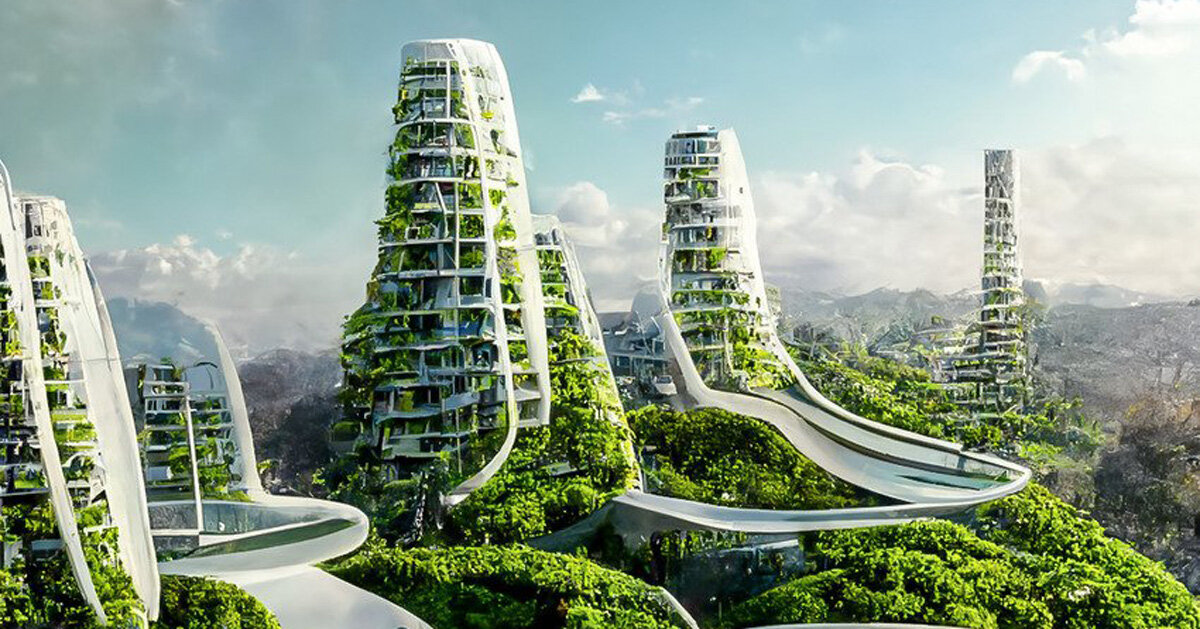
Indian designer and Midjourney user Manas Bhatia, who creates conceptual art showing futuristic cityscapes that depict complex integrations of structures and nature, agreed. Like architectural sketches, AI imagery is often colourful and dreamlike, but not necessarily actionable as a detailed plan, he explained. When used thoughtfully, sweeping expanses of glass and silicon can add construction detail and architectural rhythm. The true genius of Luma.AI occurs in renovation and restoration projects, where it can capture existing structures with striking accuracy and creates virtual twins. It bridges the gap between the tangible and the virtual, allowing architects to visualize the renovated structure even before the first brick is laid.
How to Better Leverage AI Tools in Architecture
One of the potential benefits of AI is that it might be able to help streamline workflows and allow businesses to become more efficient. And, despite larger practices having the resources to early-adopt and even develop their own AI engines, he does not think that the AI future necessarily belongs to large practices with R&D budgets. But, the designer – or the client now under the Building Regulations – will always have to make the final decision on what progresses to manufacture or to the site because there is no trust yet in where online information is being scraped from.
Top AI Tools for Architects and Designers
Operating on a cloud-based platform, Autodesk Forma is easily accessible from any location and works in tandem with AutoCAD and Revit. Sidewalk Labs is absolutely the new kid on the block, but the program has great potential in the race to rethink our urban landscapes.
Will I own the AI images make?

Architects follow the process of uploading a simple “shell” of their building, showcasing the overall usable space in each floor. In essence, even in its earliest stages, Autodesk Forma is a comprehensive architecture AI tool that supports architects in designing more thoughtful and sustainable cities. It facilitates informed design choices, promotes time and cost efficiency, and encourages the creation of sustainable designs, thereby redefining the landscape of urban planning and architecture.
We are a band of misfits full of talent and knowledge, and our fast-paced, customer-focused environment inspires us to create and achieve the client's goal. Kurani says that VR allows him to detect subtle design problems that he might not have noticed on a screen. Walking around a classroom in VR with an audiovisual engineer, for example, lets them figure out the best placements for cameras so that remote teachers can clearly see their students and vice versa. Being in VR also allows Kurani to see if an exit sign might block the view of a student sitting in a back row who is trying to see a presentation on a high projector screen. Unlock the power of generating design variations from a single sketch, providing you with unparalleled flexibility.
In its level of granular detail, Cove.tool is essentially a preconstruction digital twin, integrating with machine learning algorithms that can incrementally refine a building’s performance. New AI tools can apply generative and iterative power to urban-scale sites, looking beyond individual building requirements. This concept is exemplified by Autodesk Forma, which offers cloud-based, AI-powered insights and automations that simplify exploration of design concepts, offload repetitive tasks, and help evaluate environmental qualities surrounding a building site. We hardly need statistics to corroborate the ubiquity of data and digital media in popular culture. One index of the burgeoning cultural influence of technology is the swelling number of institutions devoted to the intersection of design, art, and technology. When compared to the number of new institutions devoted specifically to architecture founded in the same period, one might plausibly argue that data and digital media are more relevant as a cultural force than architecture itself.
To create a future for design, we must look to the challenges and opportunities of today. The data-enabled design office is no universal panacea for the ills afflicting architectural practice. Yet it might be a conduit for a richer and more vital way of practicing design—one attuned to our age and embracing the opportunities ahead. Beyond its popular and social relevance, interweaving data more deeply with design practice offers creative possibilities to address the ever expanding visual data that is an essential product of our collective society. If one scrolled through Google Images endlessly—16 hours a day, for 80 years—one would have seen about 25 billion images, a miniscule proportion of the estimated 750 billion images on the internet, or the 1.72 trillion photographs taken every year.
AI-assisted floor-plate generation is a species of parametric design, which is long-established in architecture to generate endless formal variations. As we've seen through these real-world examples, AI is not a mere tool but a catalyst for innovation in architectural design. It empowers architects to think beyond traditional boundaries and create structures that are sustainable, inclusive, and visually striking. As AI continues to evolve, it promises an exciting future where architecture becomes a harmonious blend of human creativity and artificial intelligence.